
Water Safety for Kids Across Oklahoma
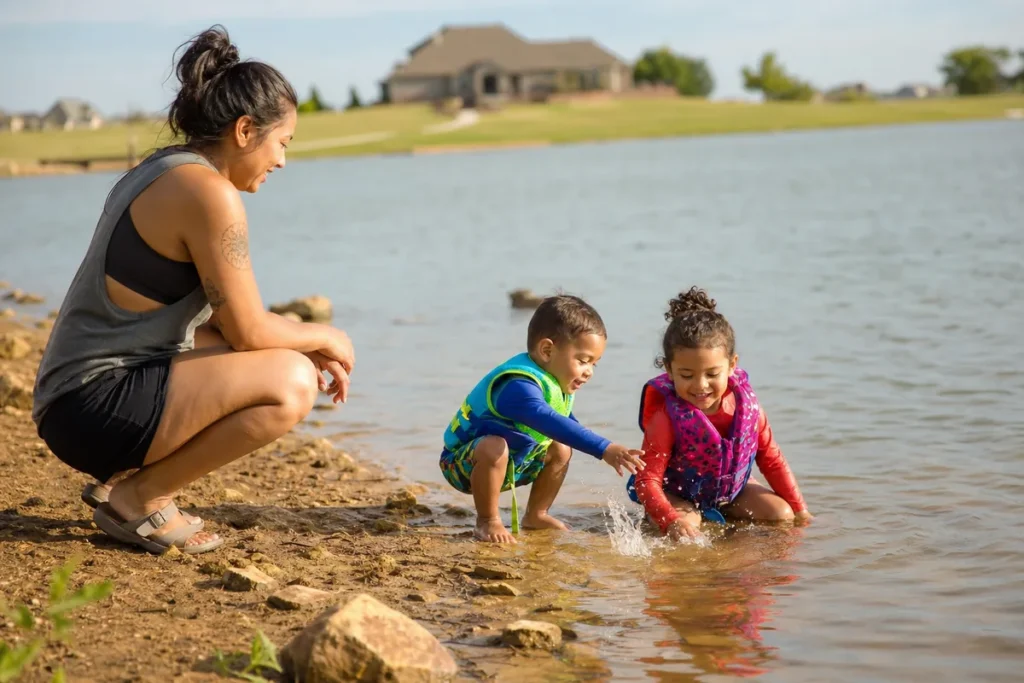
Oklahoma summers pull families toward the water, from big reservoirs and rivers to backyard and neighborhood pools. That draw comes with real risk, because drowning is a leading cause of injury death for young children.
The reassuring part is that drowning is largely preventable. Layers of simple, consistent habits protect children far better than any single precaution.
Where the risks are in Oklahoma
The state’s many lakes and reservoirs are a summer magnet, and open water brings uneven footing, sudden drop-offs, boat traffic, and limited visibility below the surface. Rivers and creeks add currents that can move faster than they look.
Pools carry their own hazards, whether a backyard pool, an apartment complex, or a friend’s house where the rules are unfamiliar. For the youngest children, even bathtubs, buckets, and small wading pools are a danger, since a child can drown in a very small amount of water.
Storm runoff is a distinctly local concern. Heavy Oklahoma rain can turn low-water crossings, drainage ditches, and normally dry creek beds into fast, deep, and deceptively powerful water within minutes.
Layers of protection
Water safety experts describe protection as overlapping layers, so that if one fails, another still stands between a child and the water. No single layer is enough on its own.
- Barriers. A fence that fully surrounds a pool on all four sides, with a self-closing and self-latching gate, separates the water from the house and yard.
- Supervision. A designated adult watching the water closely, with no distractions, is the most important layer of all.
- Life jackets. Properly fitted, Coast Guard-approved life jackets are essential on boats and around open water, and they belong on weak or non-swimmers near any water.
- Swim skills. Swim lessons reduce risk for many children, though no lesson makes a child drown-proof.
- Emergency readiness. Knowing CPR and having a phone and rescue equipment nearby can save a life in the minutes before help arrives.
These layers work together. A fenced pool still needs a watching adult, and a strong swimmer still wears a life jacket on a boat.
Swim readiness by age
Readiness for swim lessons depends on the individual child, not just a birthday, and comfort in the water varies widely. General guidance still helps parents plan.
For most children, formal swim lessons can begin around age 1, and many pediatric groups support lessons for children this age as a layer of protection. Before that, parent-and-child water play focuses on comfort rather than skills.
Between roughly ages 1 and 4, children can learn water-comfort and basic survival skills, but they still need constant, close supervision at every moment near water. By school age, many children are ready to build real swimming ability, though skill in a calm pool does not equal safety in open water with currents and waves.
Whatever a child’s skill, no age is drown-proof. Swimming lessons lower risk but never replace supervision and barriers.
Supervision rules that matter
Close supervision is the layer that saves the most lives, and drowning is often silent and fast, with no splashing or shouting to signal trouble. A child can slip under in seconds and without a sound.
- Assign a designated water watcher whose only job is watching the water, with no phone, book, or conversation to pull attention away.
- Keep young and weak swimmers within arm’s reach, a habit often called touch supervision.
- Trade the water-watcher role clearly, so there is never a gap where each adult assumes another is watching.
- Empty wading pools, buckets, and bathtubs right after use, and store them so they cannot refill with rain.
- Do not rely on inflatable toys, water wings, or floaties as safety devices, since they can slip off and give a false sense of security.
Alcohol and supervision do not mix. An adult who has been drinking is far less able to react, whether watching children or swimming to help.
Storm runoff and moving water
Oklahoma’s flash flooding turns familiar roads and low-lying spots into hazards during and after heavy rain. Moving water is deceptively strong, and even shallow, fast water can knock a child off their feet.
The safest rule for a flooded crossing is simple: turn around rather than walk, bike, or drive through it. Water over a road can hide a washed-out surface, a strong current, or a depth that is impossible to judge from the edge.
Drainage ditches, storm drains, and swollen creeks are not play areas, and children should stay well clear of them during and after storms. This piece of water safety fits within broader emergency preparedness for families, especially during Oklahoma’s storm season.
If a child goes missing near water
When a child cannot be found, checking the water first can save crucial time. Seconds matter, and the water is where the greatest danger lies.
Learning CPR gives a caregiver a vital tool while waiting for emergency responders, and many local organizations offer classes. Keeping a phone poolside to call for help, rather than as a distraction, rounds out the plan.
Frequently asked questions
At what age can my child start swim lessons?
Many children are ready for lessons around age 1, and several pediatric groups support lessons at this age as one layer of protection. Readiness varies by child, so a pediatrician can help weigh individual timing.
Do floaties or water wings keep my child safe?
No. Inflatable toys, water wings, and floaties are not safety devices, can slip off, and may give a false sense of security. Only properly fitted, Coast Guard-approved life jackets should be relied on around open water.
My child can swim well. Can I relax supervision?
No age or skill level is drown-proof. Even strong swimmers need supervision, especially in open water with currents, cold, and waves. Swimming ability lowers risk but never replaces watching and barriers.
Why is flooded-road water so dangerous?
Moving water is far stronger than it looks, and even shallow, fast water can sweep a person away or hide a washed-out road. Turning around instead of crossing is the safest choice during and after heavy rain.
What should I do if I cannot find my child near water?
Check the water first, since seconds count and drowning is silent and fast. Knowing CPR and keeping a phone nearby to call for help are important parts of being ready before an emergency happens.
Where to go next
Water safety is one layer of keeping children safe at home and outdoors, alongside emergency preparedness for families and a room-by-room home safety checklist for young children.