
Home Safety Checklist for Young Children
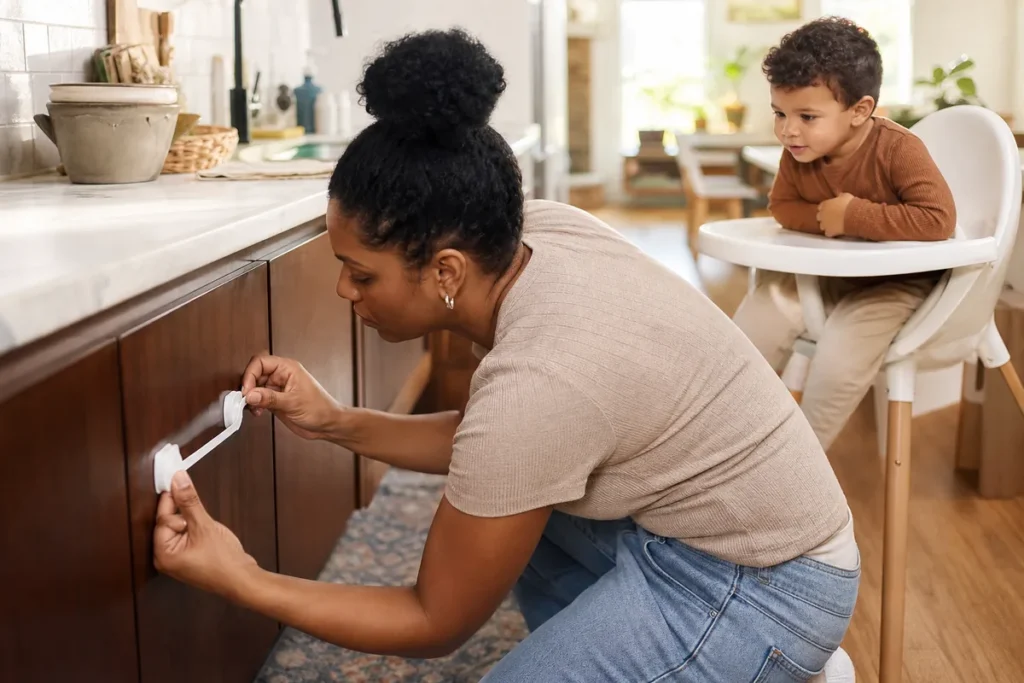
Young children learn by touching, climbing, and tasting whatever is within reach. That curiosity is healthy, and a safer home lets it run without constant intervention.
The most useful approach is to childproof room by room, then adjust as a child grows. What protects a crawling infant looks different from what a determined toddler needs, so this checklist is grouped by space and tiered by age.
Start with an infant’s-eye view
Before touching a single latch, get down on the floor at a child’s height and look around. Outlets, cords, wobbly furniture, and small objects all read differently from twelve inches up.
Two hazards deserve attention in every room: anything small enough to swallow and anything a child can pull down. A quick test is whether an object fits through a cardboard tube from paper towels; if it does, it is a choking risk for children under about age three.
Whole-home basics
- Anchor bookcases, dressers, and TVs to the wall with anti-tip straps.
- Cover unused outlets and secure loose cords out of reach.
- Install working smoke and carbon monoxide alarms and test them on a schedule.
- Keep window blind cords cut short or use cordless coverings.
- Store purses and bags with medications or coins up high, including guests’ bags.
- Program poison control and a caregiver’s number where they are easy to find.
Kitchen
The kitchen combines heat, blades, and cleaning products, so it rewards careful setup. Cooking with a curious child underfoot is easier when the danger zones are already handled.
- Turn pot handles toward the back of the stove and cook on rear burners when possible.
- Move knives, scissors, and matches to high or locked drawers.
- Lock the cabinet holding dishwasher pods, cleaners, and dish soap; these are common poisoning sources.
- Use a stove guard or knob covers once a child can reach the controls.
- Keep hot drinks away from table and counter edges.
Age tiers in the kitchen
For infants who are not yet mobile, a secured feeding area and safe food handling matter most. Once crawling and cruising begin, lock the low cabinets and clear the counter edges.
For older toddlers and preschoolers, a low step stool at a safe spot lets them help while you keep an eye on hot surfaces.
Bathroom
Water and medication make the bathroom higher-risk than its size suggests. A child can drown in very little water, and it happens quietly.
- Never leave a baby or toddler alone in the bath, even for a moment.
- Set the water heater so the hottest tap water stays at a safe temperature, generally around 120 degrees Fahrenheit or lower.
- Keep medicines, razors, and cleaners in a locked or high cabinet.
- Use a toilet lid lock for young toddlers who like to reach in.
- Put a non-slip mat in the tub and a soft spout cover on the faucet.
Stairs and living areas
Falls are among the most common reasons young children end up in an emergency room. Stairs, windows, and heavy furniture are the usual culprits.
- Mount hardware-installed safety gates at the top and bottom of stairs.
- Keep stairs clear of toys and loose rugs.
- Move furniture away from windows so children cannot climb to sills.
- Install window guards or stops that limit how far a window opens.
- Pad sharp table corners and secure any wobbly floor lamps.
Pressure-mounted gates work for doorways but not at the top of stairs, where a child’s weight can dislodge them. Reserve hardware-mounted gates for the highest-fall spots.
Sleep space
A safe sleep setup lowers the risk of suffocation and sudden infant death. The guidance from pediatric groups is consistent and worth following closely.
- Place babies on their backs to sleep, on a firm, flat surface.
- Keep the crib bare: no pillows, bumpers, blankets, or stuffed animals.
- Use a fitted sheet made for the mattress and nothing else.
- Room-share without bed-sharing for the early months.
- Lower the crib mattress as a baby learns to sit and pull up.
Once a toddler can climb out of the crib or reaches about 35 inches tall, it is time to move to a toddler bed and re-check the room for climbable furniture.
Garage, laundry, and outdoors
These spaces often hold the most dangerous chemicals in the house. Keep them locked and treat entry as a supervised event.
- Lock antifreeze, pesticides, paint, and automotive fluids in original containers up high.
- Store tools, ladders, and sharp equipment out of reach.
- Keep the garage door opener out of children’s hands and test its auto-reverse safety feature.
- Empty wading pools and buckets right after use, and fence any standing water.
- Check that outdoor play equipment sits over soft ground, not concrete.
Keep the checklist alive
Childproofing is not a one-time weekend project. A new skill, such as climbing or unlatching, can open a hazard that was closed last month.
Re-walk the house every few months and after any big change, like a move or a new piece of furniture. Pairing safety habits with everyday routines, such as healthy media limits covered in the screen time guidelines by age, helps a home stay calm as well as safe.
Frequently asked questions
When should childproofing start?
Many families begin before a baby is mobile, often during pregnancy or the early months. Anchoring furniture, setting up safe sleep, and locking chemicals early means fewer scrambles once crawling starts, usually around six to ten months.
Are cabinet locks and gates really necessary if a parent is always watching?
Supervision is the foundation, but no one watches every second. Physical barriers buy time during the brief moments an adult looks away, which is often when a fall or a poisoning happens.
What is the single most overlooked home hazard?
Unanchored furniture and televisions are a leading cause of serious injury. Dressers and bookcases can tip when a child opens drawers to climb, so wall straps are among the highest-value fixes.
How do I keep older children’s small toys away from a baby?
Give older siblings a designated play zone or high shelf for small pieces, and teach them to clean up before a baby is on the floor. Regular sweeps of play areas catch stray choking hazards.
What should I do if a child swallows something dangerous?
Stay calm and call your local poison control line right away; keep the container or item handy to describe it. If the child is choking, struggling to breathe, or unresponsive, call emergency services immediately.
Where to go next
Build on a safe home with the car seat safety guide for travel and the family emergency preparedness plan for storms and outages. Oklahoma families can also reach out to OSDH child guidance services for parenting support, and keep the number for Oklahoma Children’s Hospital on hand for medical questions.