
Car Seat Safety by Age and Stage Guide
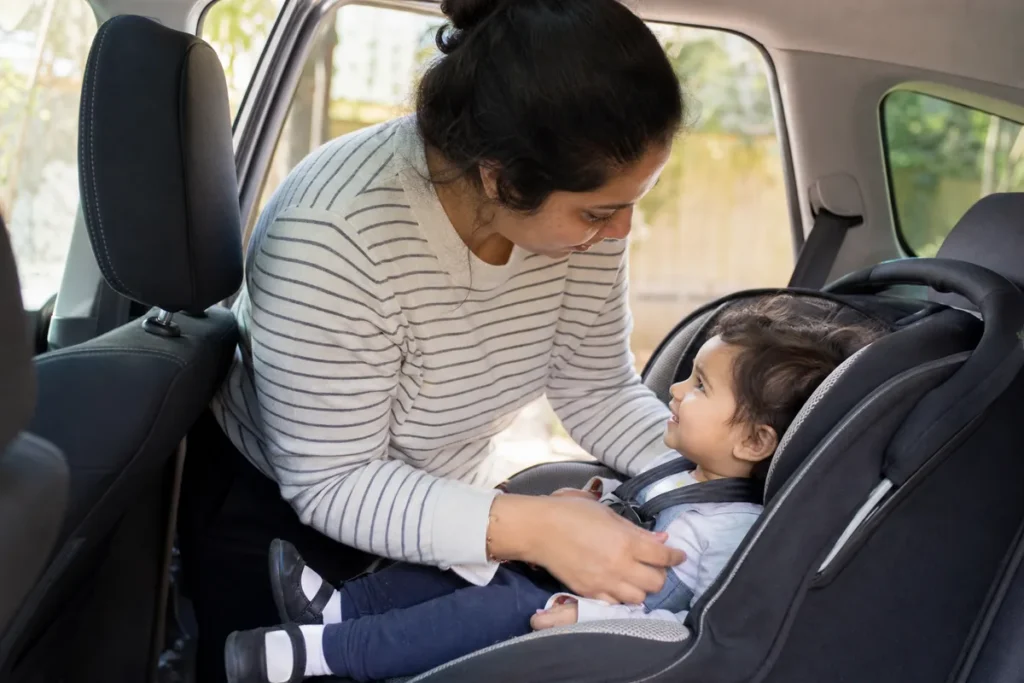
The right car seat, installed correctly and used every trip, is one of the strongest protections a child has on the road. The catch is that the right seat keeps changing as a child grows.
Safety experts describe four broad stages rather than fixed birthday cutoffs. A child moves forward only after truly outgrowing the current stage, and moving too soon trades away protection.
The four stages
Stage 1: Rear-facing
Infants and young toddlers ride in a rear-facing seat, which cradles the head, neck, and spine in a crash. The guidance is to keep a child rear-facing as long as possible, up to the top height or weight allowed by the seat.
Many convertible seats now support rear-facing well into the toddler years. There is no rush to turn a child around; the longer rear-facing, the better the protection for a developing neck.
Stage 2: Forward-facing with a harness
Once a child outgrows the rear-facing limits, they move to a forward-facing seat with a five-point harness and a top tether. This stage usually carries a child through the preschool years and often beyond.
Use the tether strap every time; it limits how far the child’s head moves forward in a crash. Stay in the harness until the child reaches the seat’s height or weight maximum.
Stage 3: Booster seat
A booster raises a child so the adult seat belt crosses the strong parts of the body. The lap belt should sit low across the upper thighs, and the shoulder belt should cross the middle of the chest and shoulder, never the neck or face.
Children generally need a booster until the seat belt fits correctly on its own, which is often around 4 feet 9 inches tall and somewhere in the range of 8 to 12 years old. Height and fit matter more than age alone.
Stage 4: Seat belt alone
A child is ready for the seat belt without a booster when they can sit all the way back with knees bent comfortably at the seat edge, and the belt lies flat across the thighs and mid-shoulder. Everyone should be buckled for every trip.
Children are safest in the back seat through at least age 12. The back seat keeps them away from front airbags, which are designed for adults.
Common installation mistakes
Surveys by safety technicians consistently find that many seats are installed or used incorrectly. Most errors fall into a handful of categories that are easy to check.
- Loose installation: a properly installed seat should not move more than about an inch side to side or front to back at the belt path.
- Loose harness: straps should be snug enough that you cannot pinch a fold of webbing at the shoulder.
- Wrong chest clip height: the clip belongs at armpit level, not on the belly or the neck.
- Mixing LATCH and seat belt: install with either the lower anchors or the seat belt, not both, unless the manufacturer allows it.
- Bulky coats: thick winter coats create slack in a crash; dress the child lightly and add blankets over the buckled harness.
- Turning forward too soon: the most common upgrade mistake is moving to the next stage before the child has outgrown the current one.
Reading both the car seat manual and the vehicle owner’s manual clears up most confusion. They are written to work together.
Where to get a seat checked
A hands-on inspection is worth seeking out, especially for a first seat. Certified child passenger safety technicians can confirm the fit and show a caregiver how to repeat it.
Free or low-cost seat checks are commonly offered through fire stations, hospitals, health departments, and community safety events. Many technicians also work by appointment, and national locator tools can point families to the nearest certified checker.
Rules on when children can change seats and stages vary from state to state. For current requirements, families should check their state’s official transportation or public safety agency and follow national safety guidance, which is often stricter than the legal minimum.
Everyday habits that keep it working
A correctly chosen seat still needs consistent use. A few routines keep protection reliable trip after trip.
- Check the harness fit each time; children wriggle straps loose.
- Register the seat so you receive recall notices.
- Note the expiration date stamped on the seat and replace it when due.
- Replace a seat after a moderate or severe crash, per the manufacturer’s guidance.
- Never leave a child alone in a parked car, where heat can rise dangerously fast.
Safe travel pairs naturally with a safe home base, covered in the home safety checklist, and with the wider family emergency plan for the road.
Choosing the right seat for your family
The best car seat is one that fits the child, fits the vehicle, and is easy enough to use correctly every single time. A pricier seat is not automatically safer; every seat sold in the country must meet the same federal safety standards.
Before buying, check the seat’s height and weight range against the child’s current size and the room it will have to grow. It also helps to confirm the seat physically fits the vehicle’s back seat, especially when installing more than one seat side by side.
- Match the seat’s limits to the child’s height and weight, not just age.
- Try the seat in the vehicle before committing when possible.
- Favor a seat you find simple to buckle and tighten, since ease drives correct use.
- Keep the instruction manual with the seat for future reinstallation.
A convertible seat that grows with the child can cover the rear-facing and forward-facing stages, which many families find convenient. Whatever the choice, correct daily use matters more than any single feature.
Frequently asked questions
Can my toddler face forward once their feet touch the seat?
Bent or crossed legs are normal and comfortable for rear-facing toddlers and are not a safety problem. Keep a child rear-facing until they reach the height or weight limit of the seat, not by leg length.
Is a used car seat safe to use?
Only if you know its full history: no crashes, not expired, no recalls, and all parts and labels present with instructions. When any of that is uncertain, a new seat is the safer choice.
When can a child sit in the front seat?
The back seat is safest through at least age 12 because of front airbags. Wait until a child is well past the booster stage and fits the adult belt correctly, and follow your vehicle’s guidance.
Do I use LATCH or the seat belt to install the seat?
Either can be correct when installed tightly; the seat should not shift more than about an inch. Do not use both at once unless the manufacturer specifically allows it, and note that lower anchors have weight limits.
How do I know the seat is tight enough?
Grip the seat at the belt path and try to move it. If it shifts more than roughly an inch side to side or front to back, it needs to be reinstalled more tightly.
Where to go next
Round out travel safety with the home childproofing checklist and the emergency preparedness guide. For medical questions about your child, Oklahoma Children’s Hospital is a helpful starting point.