
Emergency Preparedness for Families
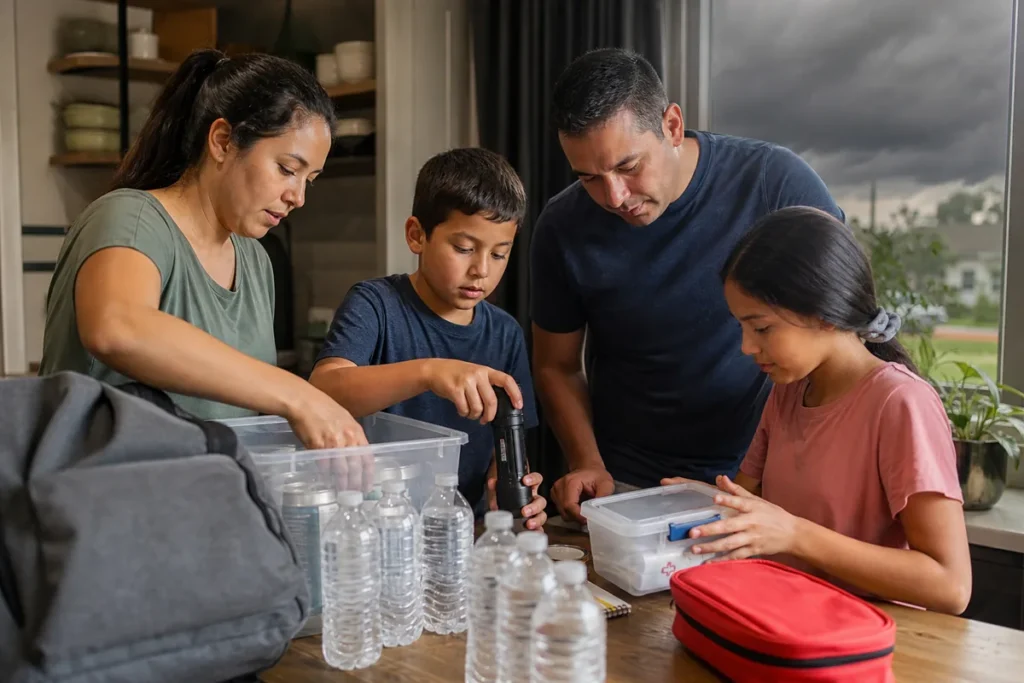
Emergencies are easier to face when a family has already talked through what to do. A plan turns a frightening moment into a series of familiar steps, especially for children.
The aim is preparation without fear. Children who have practiced a calm routine tend to feel more secure, not more anxious, because they know they have a role and a plan.
Build a family emergency plan
A good plan answers a few basic questions before anything happens. Write it down and keep a copy where everyone can find it.
- Contacts: list emergency numbers and an out-of-area relative or friend everyone can call or text if local lines are jammed.
- Meeting points: choose one spot right outside the home for a fire, and a second away from the neighborhood if returning home is not possible.
- Roles: decide who grabs the go-bag, who helps young children, and who handles pets.
- Reunification: know each school and daycare’s emergency and pickup procedures.
- Documents: keep copies of IDs, insurance, and medical information in a waterproof folder or secure digital backup.
Teach children how and when to call emergency services, and make sure they know their full name, a parent’s name, and a phone number. A younger child can practice with a toy phone.
Assemble a go-bag
A go-bag holds what a family needs to leave quickly or shelter in place. Store it where it is easy to grab and check it periodically.
- Water and non-perishable snacks for at least three days.
- Flashlight, batteries, and a battery or hand-crank radio.
- First aid kit and any regular medications.
- Copies of key documents and some cash in small bills.
- Phone chargers or a power bank.
- A change of clothes and a warm layer for each person.
- Comfort items for children, such as a small toy or blanket.
- Supplies for infants and pets if needed.
Involving children in packing their own small comfort kit gives them a sense of control. It also makes the bag feel familiar if it is ever needed.
Tornado safety for Oklahoma families
Oklahoma sits in a part of the country where severe storms and tornadoes are a regular reality. Families here benefit from a specific, well-rehearsed plan for taking shelter fast.
Know the warnings
Understand the difference between a watch and a warning. A watch means conditions are favorable for tornadoes and it is time to stay alert; a warning means one has been spotted or indicated on radar and it is time to shelter immediately.
Keep more than one way to get alerts, since power and cell service can fail. A battery or hand-crank weather radio, along with phone alerts, gives a backup.
Pick your shelter spot
The safest place is the lowest floor, in the most interior room, away from windows. A basement or a purpose-built storm shelter is best where available.
- In a home without a basement, choose an interior bathroom, closet, or hallway on the ground floor.
- Cover heads and necks with arms, a helmet, or a mattress or blankets.
- Avoid rooms with windows and exterior walls.
- Mobile homes offer little protection; plan to move to a sturdy building or community shelter well ahead of a storm.
Decide the shelter spot now and mark it as the family tornado spot. When a warning comes, there is no time to debate where to go.
Practice without scaring kids
Drills work best when they feel like a game with a clear job, not a threat. Keep the tone calm and matter-of-fact, the way a school fire drill feels routine.
- Practice walking to the shelter spot and getting into the safe position.
- Let children bring their comfort kit so the drill feels reassuring.
- Explain in simple, honest terms why the family practices, then move on.
- Praise children for doing their part, and keep drills short.
Answer questions plainly and avoid dwelling on worst-case details, which can raise anxiety without adding safety. The message is steady: the family has a plan, and everyone knows what to do.
After the emergency
The hours and days after a scare matter too. Children often process fear later, and their reactions may not appear right away.
Return to normal routines as soon as it is safe, since predictability is calming. Watch for changes in sleep, appetite, clinginess, or behavior, and offer extra reassurance.
If distress lingers, support is available. Oklahoma families can reach the 988 mental health lifeline in a crisis, or youth crisis mobile response for urgent help with a child or teen.
Prepare for other common emergencies
Tornadoes get the most attention in Oklahoma, but a family plan should stretch to cover the everyday emergencies that are far more likely. Power outages, ice storms, flooding, and household fires all reward a little advance thought.
Many of the same supplies and habits carry over. A go-bag, a meeting point, and a practiced routine work just as well when the lights go out as when a storm approaches.
- Power outages: keep flashlights and a stocked cooler plan, and never run a generator indoors or in a garage.
- Winter weather: store extra blankets, warm layers, and a few days of shelf-stable food and water.
- Flooding: know whether the home sits in a flood-prone area, and never drive or walk through moving water.
- Home fires: practice two ways out of every room and a meeting spot outside, and test smoke alarms regularly.
Teaching children the household escape routes turns a fire plan into muscle memory. Pairing this with the fixes in the home safety checklist gives a family fewer emergencies to face in the first place.
Frequently asked questions
How often should a family practice its emergency plan?
A couple of times a year is a reasonable rhythm, plus a review at the start of severe weather season. Short, calm drills keep the steps familiar without becoming a source of stress, and they help children respond automatically when it counts.
What is the difference between a tornado watch and a warning?
A watch means conditions could produce tornadoes, so stay alert and be ready to act. A warning means one has been spotted or shown on radar, so take shelter immediately rather than waiting to see it.
Where should a family shelter without a basement?
Go to the lowest floor and the most interior room, away from windows, such as a bathroom, closet, or hallway. Cover heads and necks, get as low as possible, and stay put until the warning ends.
How do I prepare my child without frightening them?
Frame drills as a practiced routine with a clear job, keep your own tone calm, and answer questions honestly but simply. A comfort item and praise help the exercise feel safe.
What belongs in a go-bag for a family with young children?
Water, food, a flashlight, first aid supplies, medications, documents, and chargers, plus diapers, formula, or other infant needs. Add a comfort item so a child feels secure if the bag is used.
Where to go next
Strengthen your household with the home safety checklist and safe travel through the car seat safety guide. For emotional support after a scare, Oklahoma families can reach the 988 mental health lifeline or contact OSDH child guidance services.