
Child Development in the Preschool Years
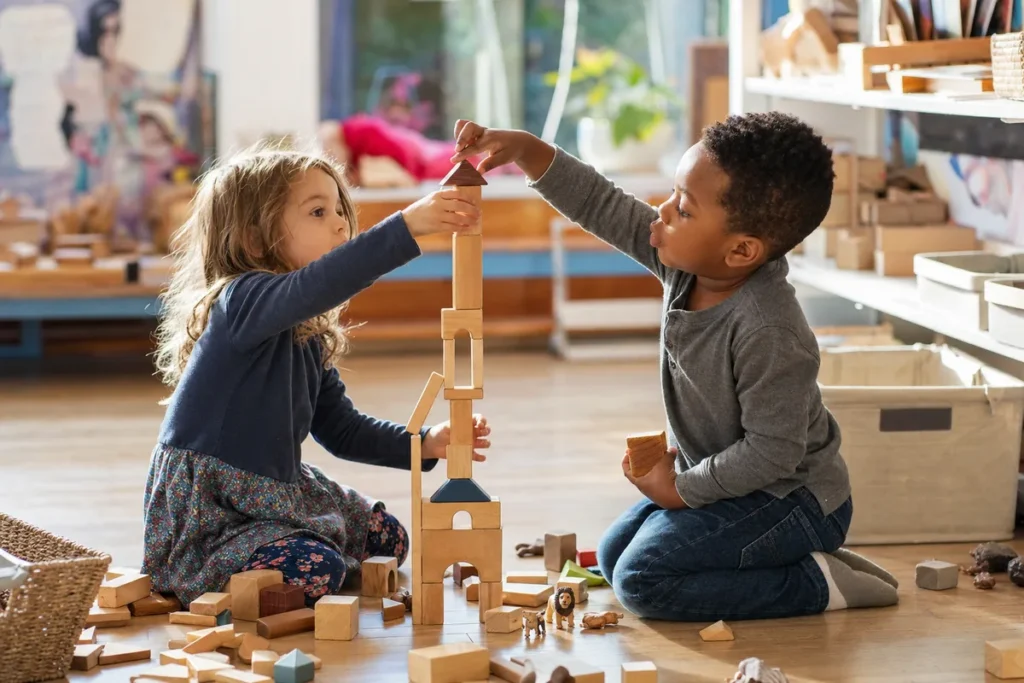
The years from three to five bring one of childhood’s biggest leaps. A child who could barely string sentences together at three often becomes a chatty, imaginative storyteller by five.
Growth in this stage touches language, movement, thinking, and emotions all at once. Knowing the broad pattern helps parents set realistic expectations and enjoy the change rather than measure it against a strict schedule.
Language takes off
Preschoolers become genuine conversationalists. Vocabulary expands rapidly, sentences grow longer, and grammar sharpens month by month.
By around age 3, many children speak in short sentences and can be understood by strangers much of the time. By age 4, speech is usually clear to unfamiliar listeners, and children tell simple stories and ask a steady stream of questions.
Near age 5, many use longer, more complex sentences, follow multi-step directions, and enjoy jokes and wordplay. The famous why phase is a feature, not a flaw; it reflects a mind working hard to understand how the world fits together.
Motor skills grow sharper
Both big-muscle and small-muscle skills advance quickly across these years. Movement becomes more coordinated, and hands grow more precise.
On the gross-motor side, many children move from unsteady running toward hopping, climbing, pedaling a tricycle, and, closer to age 5, skipping and balancing on one foot. Play that involves running, jumping, and climbing is how these skills develop, so active outdoor time is real practice, not just recess.
Fine-motor control follows its own path. Preschoolers progress from scribbles toward drawing recognizable shapes and people, using scissors, and starting to copy letters, often near age 4 or 5. Everyday tasks such as buttoning, zipping, and using a fork all build the same hand strength.
Thinking and imagination
Preschool thinking is vivid, curious, and still very concrete. Children reason from what they can see and experience rather than through abstract logic.
Pretend play blossoms in this stage and does serious developmental work. Acting out a store, a family, or a rescue mission builds language, planning, and the ability to see another point of view.
Early academic ideas take shape through play. Many preschoolers begin counting small groups, sorting by color or size, recognizing some letters and numbers, and grasping concepts like same, different, and opposite.
Magical thinking is normal here too. A preschooler may believe stuffed animals have feelings or that wishes shape events, and imaginary friends are a common, healthy part of this imaginative period.
Social and emotional development
The social-emotional shift may be the most striking change of all. Play moves from side-by-side toward truly cooperative, and children start to manage bigger feelings.
Around age 3, sharing and turn-taking are still emerging and often bumpy. By age 4 and 5, many children play cooperatively, form real friendships, follow group rules, and show growing empathy for others.
Emotional regulation is a work in progress, and that is expected. Tantrums generally ease across these years, yet a tired or overwhelmed preschooler can still melt down, and learning to name and manage feelings takes years of practice and patient coaching.
Testing limits is part of the job at this age. Consistent, calm boundaries help a child feel secure, even when they push against those limits in the moment.
Realistic expectations
The ranges above are wide on purpose, because preschoolers develop at very different rates. A late-talking three-year-old and an early-reading four-year-old can both be entirely typical.
Children also grow in spurts. A child may leap ahead in language for a season while motor skills hold steady, then flip the pattern a few months later.
Comparisons with other children, or with siblings at the same age, tend to create needless worry. Watching one child’s steady progress over time is far more meaningful than any side-by-side snapshot.
Play ideas that support this stage
Because play is how preschoolers learn, the best support is time, space, and simple materials rather than structured lessons. A handful of go-to activities cover a lot of developmental ground.
- Pretend play with dress-up clothes, toy kitchens, or figures, which builds language and cooperation.
- Drawing, painting, playdough, and safe scissors to strengthen small hand muscles.
- Building with blocks or interlocking bricks for problem-solving and spatial reasoning.
- Outdoor play such as running, climbing, and ball games for balance and coordination.
- Reading aloud daily, then talking about the story to deepen language and thinking.
- Simple board and card games that teach turn-taking, counting, and handling small setbacks.
Following a child’s interests makes any activity land better. A dinosaur-obsessed preschooler will absorb more counting from lining up dinosaurs than from a flashcard.
When to check with a pediatrician
Well-child visits remain the right place for developmental questions during these years. A few patterns are worth raising sooner: speech that strangers cannot understand by around age 4, no interest in playing with other children, trouble with stairs or simple self-care, or the loss of a skill a child already had.
Trusting a parent’s sense that something is off is reasonable, since early support tends to work best. Oklahoma families can find free developmental and speech help through OSDH Child Guidance services or explore early learning through Head Start.
Frequently asked questions
Are imaginary friends something to worry about?
No. Imaginary friends are common and healthy during the preschool years and reflect a strong imagination. They usually fade over time and are not a sign of loneliness or a problem.
My four-year-old still has tantrums. Is that normal?
Yes. Emotional regulation is still developing, and tired or overwhelmed preschoolers can melt down even as tantrums grow less frequent overall. Calm, consistent responses and help naming feelings support this slow but normal process.
Should my preschooler know letters and numbers already?
Many preschoolers recognize some letters and numbers and count small groups, but the range is wide, and formal instruction is not expected yet. Playful exposure through books, songs, and games matters more than mastery at this age.
How much physical activity does a preschooler need?
Preschoolers need plenty of active play spread through the day for healthy motor development. Running, climbing, and jumping are how gross-motor skills grow, so daily outdoor or active time is both fun and important.
My child develops unevenly across skills. Is that a concern?
Usually not. Children commonly surge in one area while another holds steady, then switch. Steady overall progress matters more than even growth across every skill. Mention any lost skill or lasting concern to your pediatrician.
Where to go next
This stage builds on toddler speech development and leads directly into school readiness before kindergarten. Oklahoma families can explore early learning through Head Start or find developmental support through OSDH Child Guidance.