
Toddler Speech Development: What to Expect
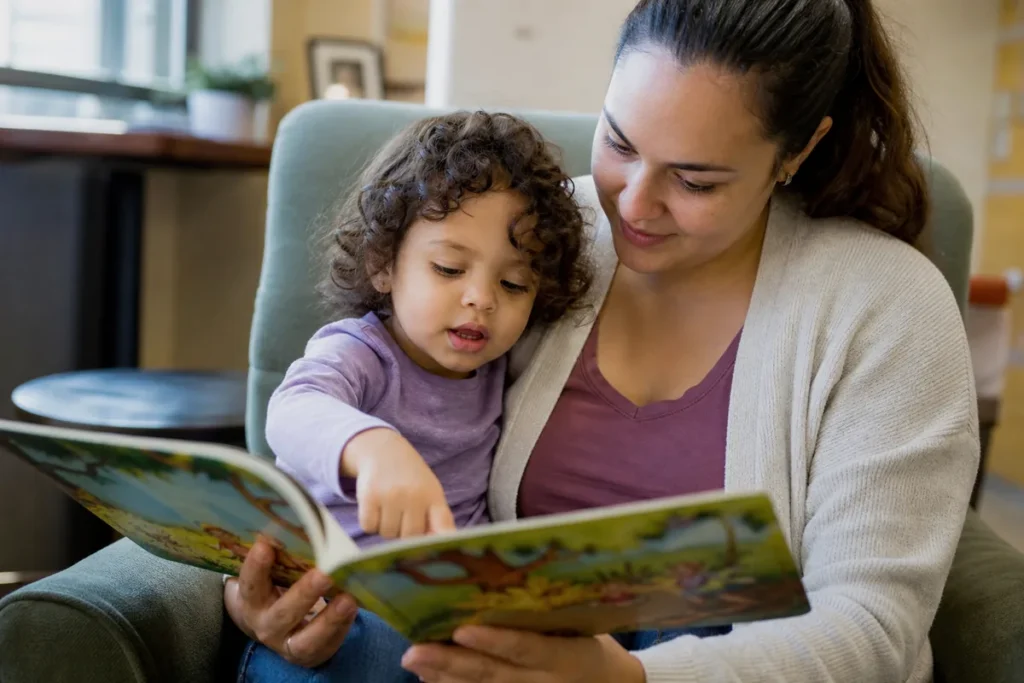
Between the first and third birthdays, most children move from single words to short sentences, and the pace can feel dizzying. Language growth in this window is uneven by nature, with quiet stretches followed by sudden leaps.
Understanding the typical ranges helps parents tell ordinary variation apart from signs worth checking. It also points to simple daily habits that support talking without turning play into a lesson.
What speech looks like from 1 to 3 years
Early language has two sides that grow together: understanding, called receptive language, and speaking, called expressive language. Toddlers almost always understand far more than they can say, which is completely normal.
The ranges below reflect mainstream pediatric guidance. They describe what many children do, not a rigid schedule, so a child can sit comfortably at either edge of a range and still be developing typically.
Around 12 to 18 months
Many children use a handful of words by around 12 months and steadily add more over the following months. Words are often approximate at this stage, so a version like ba for bottle counts.
Pointing, gesturing, and following simple one-step requests, such as come here, show that comprehension is building. A toddler who understands and communicates through gestures is laying real groundwork for speech.
Around 18 to 24 months
This period often brings a noticeable jump in vocabulary. By 24 months, many children use somewhere around 50 or more words and begin combining two of them, such as more milk or daddy go.
Speech is frequently unclear to strangers at this age, and that is expected. Familiar adults typically understand roughly half of a two-year-old’s words, with clarity improving month by month.
Around 24 to 36 months
Between the second and third birthdays, sentences lengthen and questions multiply. Many three-year-olds string together three or more words, use early grammar, and can be understood by unfamiliar listeners a good deal of the time.
Vocabulary expands quickly now, often faster than parents can count. Curiosity-driven questions, especially what and why, become a daily feature of conversation.
Red flags worth checking
Certain patterns suggest a conversation with a pediatrician rather than continued waiting. None of these guarantees a problem, but each is a reasonable reason to ask.
- No words by around 15 to 16 months, or no babbling and gesturing before that.
- Not combining two words by about 24 months.
- Losing words or skills the child previously used.
- Rarely making eye contact, pointing, or sharing attention with others.
- Little response to name or to simple spoken requests.
- Speech that is extremely hard to understand well past the second birthday.
Regression, meaning the loss of language a child already had, always deserves a prompt call. Parental instinct is a valid reason to ask, and a provider would rather reassure a family than miss an early window for support.
What parents can do every day
The strongest language support is ordinary, responsive conversation woven through daily routines. None of it requires flashcards or screens.
Narrate the day out loud, describing what is happening during meals, baths, and walks. Rich, everyday talk gives a toddler a steady stream of words to absorb.
When a child says a word, expand it. If a toddler says dog, a parent might answer, yes, a big brown dog, which models the next step without correction or pressure.
Reading together is one of the most reliable habits at this age. Pausing to name pictures, ask simple questions, and let the child turn pages builds both vocabulary and back-and-forth conversation.
Give real wait time after a question, since toddlers need several seconds to form a reply. Following a child’s lead toward whatever has caught their interest tends to spark far more language than steering them toward an adult-chosen topic.
Songs, rhymes, and finger plays give language another foothold. The rhythm and repetition make new words easy to remember, and many toddlers try out a word inside a familiar song before using it anywhere else. Offering simple choices helps too, since asking whether a child wants the apple or the banana invites a real answer rather than a yes-or-no reply. Naming feelings out loud, such as you seem frustrated, hands a child the vocabulary to express big emotions with words instead of meltdowns.
Because hearing and speech are closely linked, untreated ear infections or hearing loss can slow language. Ask the pediatrician about a hearing check if speech seems delayed.
Getting an evaluation
When a delay is suspected, a professional evaluation is the clearest next step. Early support has a strong track record, and there is no downside to asking sooner.
Families in Oklahoma can request a free early-intervention evaluation for children under three through SoonerStart, which does not require a doctor’s referral to begin. Free speech therapy and developmental screening may also be available through OSDH Child Guidance services at county health departments, and children’s coverage can be explored through SoonerCare.
A pediatrician remains the right first call for medical concerns and can coordinate referrals. Combining that medical view with an early-intervention evaluation gives most families a clear, workable plan.
Frequently asked questions
My toddler understands everything but barely talks. Is that a delay?
Strong understanding is a very good sign, and comprehension normally runs ahead of speaking. Still, if a child is not using words by around 15 to 16 months or not combining two words by 24 months, it is worth mentioning to a pediatrician even when understanding seems fine.
Does being bilingual cause speech delays?
No. Learning two languages does not delay speech, and children raised with more than one language reach overall milestones on a typical timeline. Total words are counted across both languages, and some mixing of the two is normal.
Should I be worried that strangers can’t understand my two-year-old?
Usually not. Familiar adults typically understand about half of a two-year-old’s speech, and clarity improves through the third year. Persistent, severe unintelligibility well past age two is worth raising with a pediatrician.
Do screens or speech apps help toddlers talk?
Live, back-and-forth interaction with people is what drives early language, and pediatric guidance favors limited screen time for toddlers. Talking, reading, and playing together do far more than any app.
Do I need a doctor’s referral for early intervention?
In Oklahoma, families can contact SoonerStart directly to request an evaluation for a child under three without a physician referral. A pediatrician can still help and is the right contact for any medical concern.
Where to go next
To see how language fits the bigger picture, the guide to the preschool years covers what comes after age three, while first-year milestones looks back at the foundation. Oklahoma families can request a free evaluation through SoonerStart or explore speech services through OSDH Child Guidance.