
School Readiness Skills Before Kindergarten
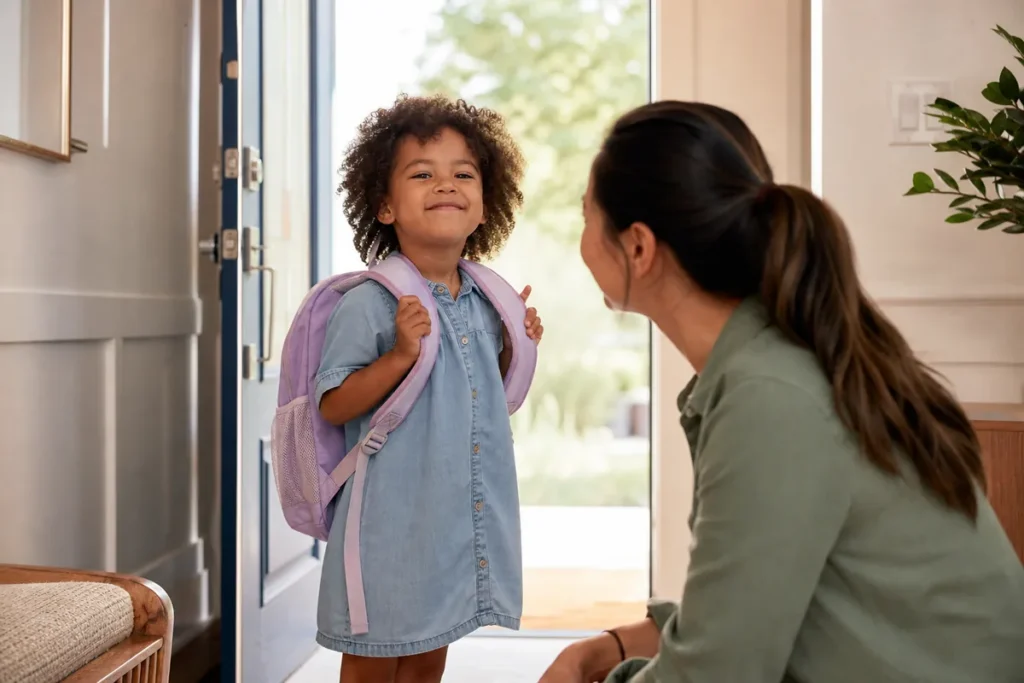
School readiness has less to do with knowing letters by heart and more to do with a mix of practical skills that help a child manage a classroom day. Most of those skills are built through ordinary play and routines, not worksheets.
Kindergarten teachers tend to notice self-help, social, and early academic abilities working together. The sections below break down what readiness looks like and how everyday moments can strengthen each area.
What readiness really means
Readiness is a spread of developing skills, not a finish line every child crosses at the same point. Children arrive at kindergarten with different strengths, and a good classroom expects that range.
The goal is not a child who already reads or does arithmetic. It is a child who can separate from a parent, follow simple directions, get along with others, and stay curious enough to keep learning.
Framing readiness this way lowers the pressure. It shifts attention from drilling facts toward the confidence and independence that help a child thrive once school begins.
Self-help and independence
Classrooms move faster when children can handle small tasks on their own. These self-care abilities free a teacher to teach rather than manage every coat and lunchbox.
Helpful skills include using the bathroom independently, washing hands, putting on a coat and shoes, opening lunch containers, and cleaning up after an activity. Managing belongings and following a simple routine matter as much as any academic skill.
Everyday routines build these abilities naturally. Letting a child dress themselves, pour from a small pitcher, or pack part of a backpack trades a little extra time now for real independence later.
Social and emotional skills
The social side of kindergarten is often the biggest adjustment. Children spend the day sharing space, taking turns, and coping with feelings away from home.
Readiness here shows up as taking turns, sharing materials, following group directions, and separating from a caregiver without lasting distress. Beginning to name feelings and recover from small frustrations is part of the picture too.
Playdates, group activities, and simple turn-taking games give children practice. Coaching through minor conflicts, rather than solving every one for them, helps children build the problem-solving they will lean on in class.
Early literacy through play
Pre-literacy is about falling in love with language and sound, long before formal reading. A child does not need to read to be ready; a child needs to enjoy books and hear how words work.
Reading aloud daily is the most powerful habit here. It builds vocabulary, attention, and the understanding that print carries meaning.
Playful sound games strengthen the ear for language. Rhyming, clapping out syllables in names, and spotting words that start with the same sound all support later reading in a low-pressure way.
Recognizing some letters, especially those in a child’s own name, and holding a crayon to scribble or draw are useful early steps. Storytelling, singing, and simply talking through the day matter just as much as any letter chart.
Early numeracy through play
Math readiness also grows through play rather than drills. Young children absorb number sense from cooking, sorting, and building.
Counting real objects, not just reciting numbers, helps a child connect the word to the quantity. Counting stairs, snack crackers, or toys during cleanup turns math into a natural part of the day.
Sorting and patterns build the reasoning under early math. Grouping laundry by color, lining up toys by size, or continuing a simple red-blue-red pattern all count.
Everyday shape and comparison talk rounds it out. Naming circles and squares in the neighborhood, and using words like more, less, bigger, and smaller, gives a child a solid base to build on.
Building readiness through everyday play
Play is the main engine of this development, so the best preparation rarely looks like school. Blocks, pretend play, puzzles, outdoor movement, and art each strengthen several skills at once.
Pretend play, for example, builds language, cooperation, and emotional understanding in a single game of pretend store or house. Puzzles and building toys support problem-solving and early spatial reasoning.
Consistent routines add a quieter kind of readiness. Predictable mealtimes, a steady bedtime, and enough sleep help a child arrive at school regulated and ready to learn.
Attention and persistence grow quietly through this kind of play as well. A child who finishes a puzzle, tolerates a little frustration, and returns to a tricky task is practicing the focus a classroom asks for every day. Board games are especially useful here, since waiting for a turn and coping with losing are real readiness skills. The aim is not a child who never gets frustrated, but one who can stick with something, bounce back from small setbacks, and stay curious enough to try again.
Programs and support for Oklahoma families
Some families want structured help building these skills, and quality early programs can offer it. Preschool experiences that emphasize play, language, and social skills line up well with readiness goals.
In Oklahoma, income-eligible families can look into Head Start, which supports early learning, health, and family services for young children. If there are concerns about development or speech that could affect readiness, free screening and support may be available through OSDH Child Guidance services.
A pediatrician can also weigh in during well-child visits and flag anything that deserves a closer look. Raising readiness questions early leaves plenty of time to prepare before the first day.
Frequently asked questions
Does my child need to read before kindergarten?
No. Kindergarten is designed to teach reading, and most children arrive not yet reading. Enjoying books, knowing some letters, and hearing rhymes and sounds are the readiness signs that matter far more than reading itself.
My child is shy and struggles to separate from me. Is that a readiness problem?
Shyness alone is not a barrier, and separation gets easier with practice. Short, positive time apart, playdates, and group activities help. If separation causes lasting, intense distress, mention it to your pediatrician.
What is the most useful thing I can do at home?
Read aloud every day and talk with your child through ordinary routines. Daily reading and rich conversation support vocabulary, attention, and a love of learning, which underpin nearly every readiness skill.
How much do self-help skills really matter?
They matter a lot for the daily flow of a classroom. A child who can manage the bathroom, coat, and lunch independently can focus on learning and feels more confident, which is why teachers value these skills.
Is preschool required for kindergarten readiness?
No single path is required. Quality preschool can help, and so can a language-rich home with plenty of play and social opportunities. Programs like Head Start are one option for families who want structured support.
Where to go next
Readiness builds on the earlier stages covered in the preschool years and, before that, toddler speech development. Oklahoma families can explore early learning through Head Start or find developmental and speech support through OSDH Child Guidance.