
Separation Anxiety at Daycare Drop-Offs
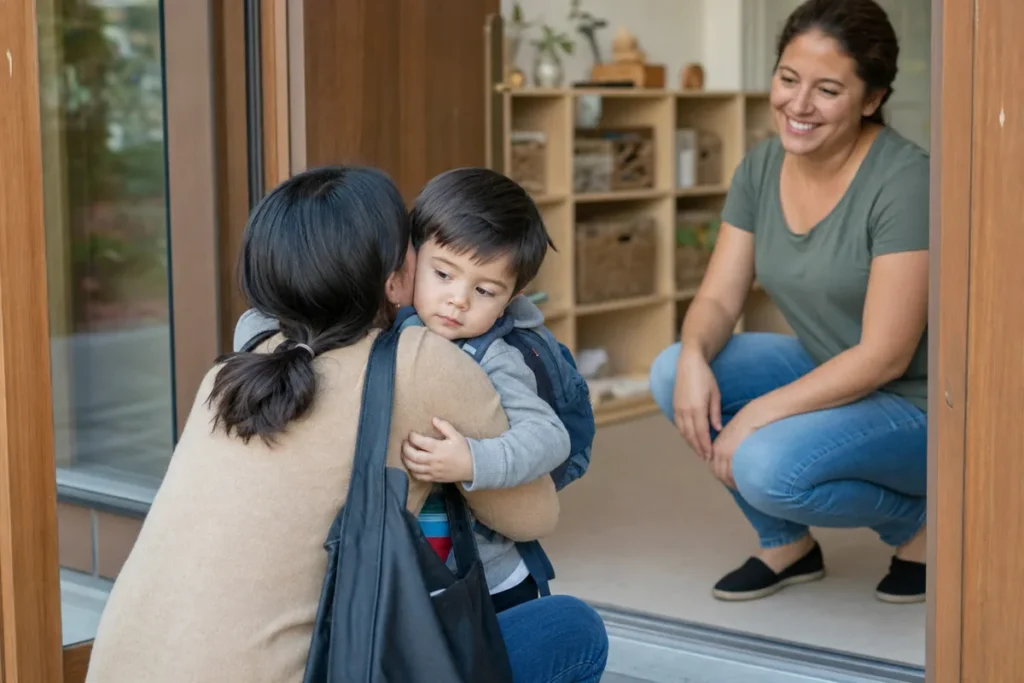
Few parenting moments sting like a child crying and clinging at the daycare door. It can feel like a sign that something is wrong, either with the child or the choice of care.
In most cases the opposite is true. Separation anxiety is a normal, expected part of healthy development, and a few steady habits make drop-offs easier for everyone.
Why separation anxiety happens
Separation anxiety grows out of attachment, the strong bond a child forms with familiar caregivers. When a baby learns that certain people mean safety and comfort, being apart from them naturally feels distressing.
It also reflects a cognitive leap. Once a child understands that a parent still exists after leaving the room, a concept that takes shape during the first year, they can miss that parent and protest the absence.
Seen this way, tears at drop-off are a sign the attachment system is working. This is one of the reassuring threads running through the first-year developmental milestones.
The developmental timeline
Separation anxiety commonly appears in the second half of the first year and often peaks between roughly 10 and 18 months. Many toddlers move through it, then have a fresh wave during the preschool years or at any big transition.
Starting daycare, changing rooms, welcoming a new sibling, or returning after a long break can all reignite clingy behavior. A new bout does not erase earlier progress; it usually reflects a change the child is working to adjust to.
By the later preschool years, most children separate more easily as language, memory, and social skills mature. Lingering, intense distress well beyond this stage is worth discussing with a pediatrician.
Drop-off routines that work
Predictability is the strongest tool a parent has. A short, consistent goodbye ritual tells a child what to expect and signals that the parent is calm and confident about leaving.
- Build in a little extra time so the morning is not rushed, since hurry raises everyone’s stress.
- Create a brief goodbye ritual, such as a hug, a specific phrase, and a wave at the window, then repeat it the same way each day.
- Keep the goodbye warm but brief, because a drawn-out farewell tends to raise anxiety rather than ease it.
- Hand the child to a familiar teacher who can offer comfort and a distraction after the parent leaves.
- Tell the child clearly that the parent is leaving and will be back, rather than sneaking out.
A comfort item from home, where the program allows it, can bridge the gap. A small photo, a familiar blanket, or a favorite stuffed animal gives a child a tangible link to family during the day.
What to avoid at drop-off
A few well-meant habits tend to make separation harder. Sneaking away without a goodbye is the most common, and it often backfires by teaching a child that a parent may vanish at any moment, which can raise vigilance and clinginess.
Lingering is the other trap. Returning again and again for one more hug, or hovering in the doorway, stretches out the hardest moment and can signal that the parent is worried too.
Big displays of the parent’s own distress add to the load. Staying calm and matter-of-fact, even while feeling a pang inside, helps a child read the separation as safe and ordinary.
What teachers wish parents knew
Experienced caregivers see the same pattern play out daily, and their perspective is reassuring. The crying almost always stops within a few minutes of the parent leaving, and children who sob at the door are frequently playing happily soon after.
Teachers generally prefer a brief, confident goodbye and a quick handoff, because a prolonged farewell keeps a child in the hardest emotional state. Many are glad to send a quick message or photo later so a worried parent can see that the child settled.
Consistency between home and the program helps a child feel secure. Sharing the goodbye routine with teachers, and trusting them to comfort the child afterward, turns drop-off into a team effort rather than a solo ordeal.
When to check with the pediatrician
Most separation anxiety fades with time and steady routines, but some patterns are worth raising. Talk with a pediatrician if the distress is severe and lasts for hours after drop-off, seems far more intense than in peers of the same age, or continues well into the school years.
Other reasons to check in include separation fears that spill into sleep, frequent physical complaints like stomachaches tied to leaving, or anxiety that keeps a child from normal activities. A pediatrician can tell ordinary developmental anxiety from a concern that needs more support.
Frequently asked questions
How long does separation anxiety usually last?
It often peaks in the toddler months and eases over time, though new waves can appear at transitions. Most children separate more comfortably by the later preschool years as their language and coping skills grow.
Should I sneak out to avoid the tears?
No. Slipping away without a goodbye can make a child more anxious, since it teaches that a parent might disappear at any moment. A short, clear goodbye and a promise to return builds more trust.
My child cries at drop-off but the teacher says he is fine later. Which is true?
Both. The distress at goodbye is real, and so is the quick recovery once a parent leaves and a teacher offers comfort and distraction. Asking for a mid-morning update can ease a parent’s mind.
Does a hard time at drop-off mean the daycare is a bad fit?
Not usually. Separation protest is common even in excellent programs and reflects attachment rather than a problem with the setting. Ongoing signs of fear, withdrawal, or regression, however, are worth discussing with staff.
Would starting later or easing in help?
A gradual start, with short visits that lengthen over days, can help many children adjust. Programs often support a phased transition, so it is reasonable to ask what options exist.
Where to go next
Separation anxiety builds on the attachment described in the first-year milestones and eases through the preschool years. Families choosing or comparing care can use the Oklahoma Child Care Resource and Referral network.