
Building Reading Habits in Early Childhood
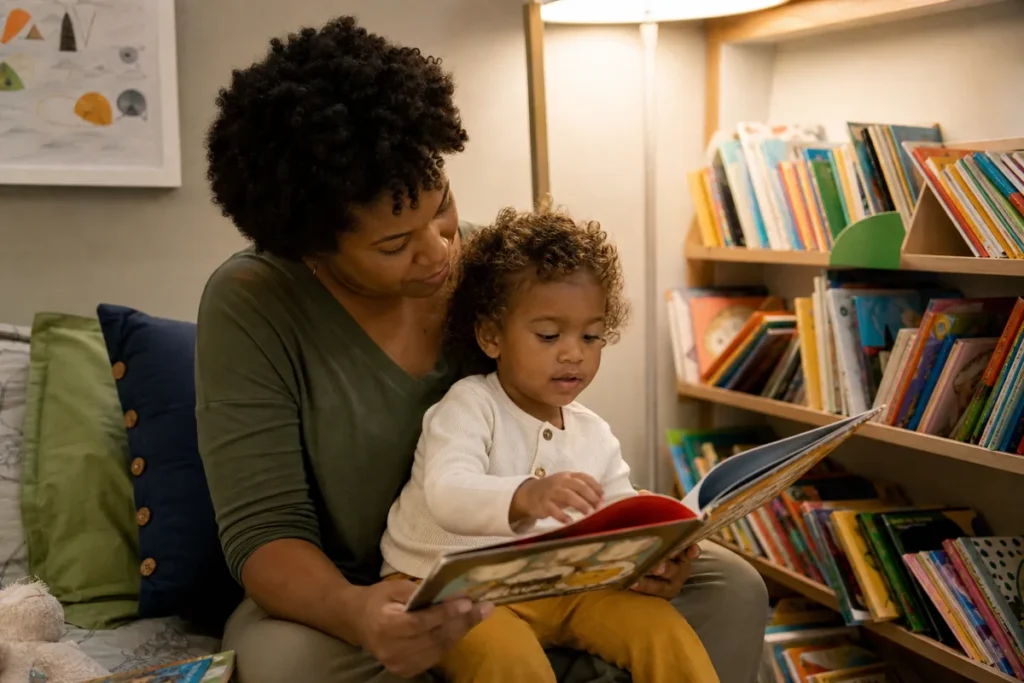
Reading with a young child does more than fill a few quiet minutes. It shapes language, attention, and a lifelong relationship with books, and it starts long before a child can read a word.
The most useful reading habits are simple and repeatable. A short daily ritual, a handful of loved books, and an easy trip to the library outweigh any fancy program or app.
Why the early years matter for reading
The brain builds language fastest in the first few years of life, and shared reading feeds that growth directly. Books expose children to words and sentence patterns that rarely come up in everyday talk.
Reading aloud also links books with warmth and closeness. A child who associates stories with a cozy lap and a familiar voice tends to seek out reading later on.
None of this depends on early decoding. The goal in these years is exposure and enjoyment, not teaching a toddler to read, and pressure to read early can do more harm than good.
Daily reading rituals from birth to five
A predictable time for books makes reading a habit rather than an occasional treat. Bedtime is the classic anchor, but a story after lunch or before a nap works just as well.
Babies, birth to about age 1
Newborns benefit from hearing a caregiver’s voice, so reading anything aloud counts. Sturdy board books, high-contrast pictures, and simple rhymes fit short attention spans, and babies often explore books by mouthing and grabbing them, which is normal.
Toddlers, about ages 1 to 3
Toddlers like to point, name, turn pages, and hear the same book many times. Repetition is how they learn, so rereading a favorite is valuable even when it tests a parent’s patience.
Preschoolers, about ages 3 to 5
Preschoolers can follow longer stories, predict what comes next, and connect books to their own lives. This is a strong age for talking about the plot and for stories that stretch a bit beyond the everyday.
Dialogic reading turns a book into a conversation
Reading aloud helps most when it becomes a two-way exchange rather than a straight recital. This approach, often called dialogic reading, invites the child to help tell the story.
The pattern is easy to remember: ask an open question, listen to the answer, add a few words to what the child says, then repeat. Over many readings the adult talks less and the child talks more.
- Ask open questions such as what is happening on this page or why a character looks sad, rather than questions with a single yes-or-no answer.
- Follow the child’s interest, pausing on the pages that grab attention instead of racing to the end.
- Connect the story to the child’s world, linking a book about a dog to the neighbor’s dog, for example.
- Expand on short answers by repeating what the child said and adding a detail or a new word.
This kind of back-and-forth is closely tied to stronger vocabulary and early literacy, and it builds naturally on the language gains of the toddler years described in toddler speech development.
Building the library habit
A regular library visit keeps a home stocked with fresh books without a growing bill. Free access to a wide range of titles lets a child follow new interests as they shift from trucks to dinosaurs to space.
Many Oklahoma libraries offer story times, early literacy programs, and summer reading challenges that make books social and fun. A predictable weekly or biweekly trip, plus a special library bag or a child’s own card, turns borrowing into a ritual a child looks forward to.
Quality child care can reinforce the habit, since strong early programs read to children every day. Families comparing options can ask about daily reading and find care through the Oklahoma Child Care Resource and Referral network.
Choosing books children return to
The best book for a young child is often the one they ask for again and again. Letting a child help choose builds ownership and keeps interest high.
Variety helps over time: rhyming and rhythmic texts train the ear for sounds, wordless picture books invite a child to narrate, and simple nonfiction feeds a curious mind. Books that mirror a child’s family and community, and others that open a window onto different lives, both have a place on the shelf.
Keeping a few books within a child’s reach, not only up high, signals that books belong to them. A small basket in the play area often gets more use than a tidy top shelf.
Keeping it enjoyable
Reading should feel like a pleasure, not a lesson, so following the child’s mood matters. A restless toddler who wants to close the book after two pages has still gained something, and forcing a full story can sour the whole ritual.
Short and frequent beats long and rare. A few minutes of engaged, happy reading every day builds a stronger habit than an occasional marathon session, and it lays groundwork for the skills covered in school readiness before kindergarten.
Frequently asked questions
How much should I read to my child each day?
A common goal is around fifteen to twenty minutes a day, but consistency matters more than the exact number. Several short sessions can work as well as one longer one, and any daily reading is worthwhile.
My toddler wants the same book every night. Is that a problem?
No. Repetition is how young children learn language and story structure, and returning to a favorite builds comfort and confidence. Rereading a loved book is genuinely useful, even when it feels tedious to the adult.
Do audiobooks or reading apps count?
They can supplement shared reading but do not replace it, because the back-and-forth talk with a caregiver is a big part of the benefit. A lap, a real book, and conversation remain the most valuable combination in the early years.
Should I teach my preschooler to read?
Formal reading instruction is not expected before kindergarten. Reading aloud, playing with rhymes and sounds, and pointing out letters in a playful way build the foundation far better than drills at this age.
What if my child will not sit still for a book?
Keep sessions short, let the child turn pages or move, and follow their interest. Interactive and sturdy books help, and stopping while the experience is still positive protects the habit for next time.
Where to go next
Reading grows alongside the leaps described in toddler speech development and the preschool years. Oklahoma families can also find quality early learning through the Oklahoma Child Care Resource and Referral network.